
Cuach Torc is 330 km (205 miles) south-west of KP, in another of Sudan's volcanic fields. He is still on the western edge of the Marrah Mountains, approximately 73 km (45 miles) north-west of the town of Zalingei.
Cuach Torc is 330 km (205 miles) south-west of KP, in another of Sudan's volcanic fields. He is still on the western edge of the Marrah Mountains, approximately 73 km (45 miles) north-west of the town of Zalingei.
The latest bulletin from the BTO.
Since crossing the Sahara, Cuach Torc has flown 117 km (72 miles) south and is now in the Sahel of Central Darfur, Sudan. He
is currently on the western edge of the Marrah Mountains, approximately
73 km (45 miles) north-west of the town of Zalingei and 390 km (242
miles) south-west of KP.
The latest bulletin from the BTO.
"Dear John,
In our last update we told you that Irish Cuckoo Cuach Torc had moved to Greece. Since then he has made quite a journey. By Saturday evening (29 July) he had departed Greece, crossed the Mediterranean and reached northern Libya. He carried on south and by late on Monday (31 July) he was over the Sahara in eastern Chad. By early yesterday morning (3 August) he had reached the Marrah Mountains in Darfur, Sudan. He is currently 40 km (25 miles) west of the town of Kutum. Interestingly, neither Greece nor Sudan have been common destinations for our previously tagged birds. It'll be interesting to see whether Torc remains in the area or continues further south into the Sahel."
Sadly we have another case of a village animal being poisoned by our
abundant plantlife, this time a dog which was seen eating something low
down in the grass along the path at the back of the Manor House.
Thankfully it survived, though the vet's bill was enormous. Of the
seventeen or so plants identifiable along that path the one that stands
out as particularly poisonous is the Lords and Ladies, Arum maculatum. Its bright red berries, though not often consumed, are very posionous and must be avoided.
 |
| Lords and Ladies' Berries. Photo. John Elliott |
Also in full bloom along the stream is our other very poisonous plant, Hemlock Water Dropwort, which was responsible for the poisoning of a lamb in the village last year.
Readers of Saturday's Echo will have noted the vet's weekly column which includes a note on this plant-
The most tragic poisoning I have ever treated in my 26 years as a vet was a young Labrador that had eaten Water Hemlock root and developed almost immediate seizures - despite days of intense treatment we were not able to save that dog.
 | |
| Hemlock Water Dropwort. Photo. John Elliott | |
 |
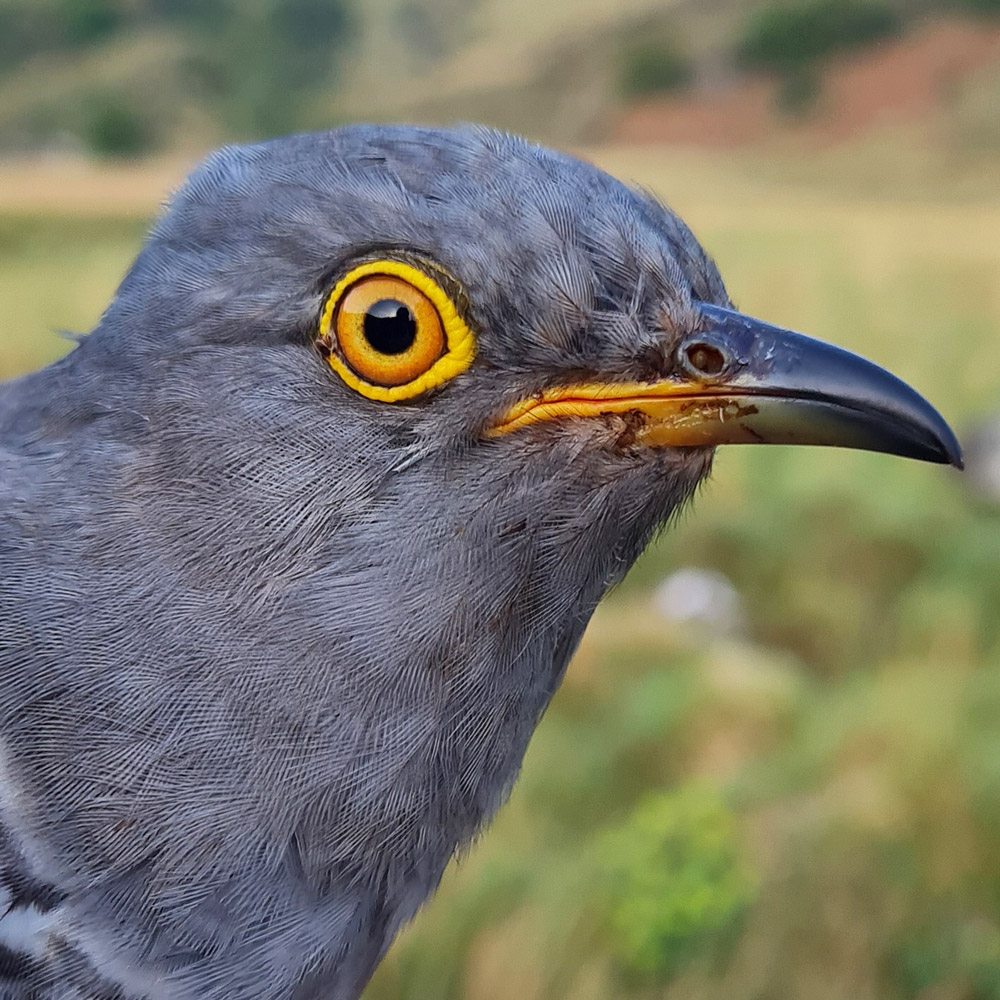
| Cuach Torc. |
The latest bulletin from the BTO.
After a bit of a hiatus, Irish Cuckoo Cuach Torc is on the move again. He has flown 773 km (480 miles) south from Bosnia & Herzegovina to southern Greece. He has spent the last couple of days in the countryside around the town of Gytheio, on the eastern shore of the Mani Peninsula. Will he be the next to attempt to cross the Sahara?
 |
| Cuach Torc. |
Following the untimely death of Cuach Carron, which never managed to leave the area where it was born, I have adopted a new Cuckoo, Cuach Torc, which comes from southern Ireland, and is now well on its way to its African wintering grounds, Here is the latest bulletin from the BTO.
After about a week on the Adriatic coast close to Ravenna in northern Italy, Cuach Torc has flown 530 km (329 miles) south-east, across the Adriatic Sea.
Having initially made landfall on the border between Croatia and Bosnia and Herzegovina, he has since moved further inland into Bosnia and Herzegovina.
He is now nearby the town of Bileca in East Herzegovina, close to the border with Montenegro. | ||||||
| Pyramidal Orchid. Photo. John Elliott | The very small Pyramidal Orchid which appeared in the valley last year has re-appeared recently. There was a much better specimen in 2021 but that was dug up and lost, so this unusually stunted specimen which is difficult to see, may survive. |
