The latest bulletin from BTO on my tagged Cucko0, JAC.
|
 |
|
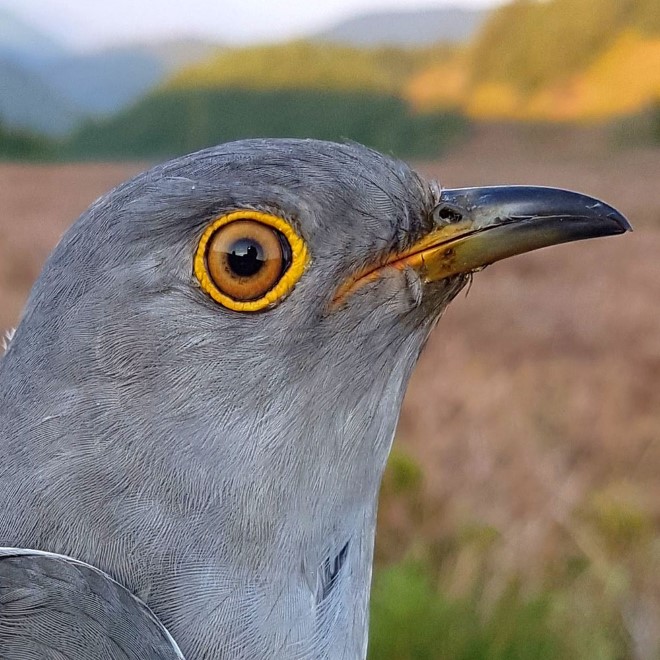
The latest bulletin from BTO on my tagged Cucko0, JAC.
|
|
|

The latest bulletin from the BTO.
The Cuckoos have been very active since our last update and we have a
new leader in the race back to the UK. When we last updated you
Llangollen Cuckoo JAC had become the first of our tagged birds to
cross the Sahara and he continued straight on to Spain. He has since
flown a further 515km (320 miles) north east from his last location in
Andalusia. He is now close to the village of Graja de Campalbo in the
province of Cuenca, Castilla-La Mancha.

Llangollen Cuckoo JAC has not only crossed the Sahara but continued on into Spain. He has flown 3,047km (1,893 miles) north since our last update, taking him from south eastern Guinea over the Sahara and the Strait of Gibraltar into southern Spain. He is now close to the town of Gaucín in the mountains of Andalusia in Málaga. Last year he stayed in southern Spain until 26 April when he moved north again, arriving back in Llangollen on 29 April. It'll be interesting to see whether he takes a break in Spain this year before embarking on the next stage of his migration.
What an amzing journey.
.
Over the last fifty or so years night-time visitors to my garden have included Badgers, Foxes and Hedgehogs, with the latter the most easily seen, as they seem not terribly worried by either light or sound from me. I even managed to tread on one on one occasion, and once rescued a rolled up, squealing hedgehog which a badger was trying to unroll.
Kind neighbours gave me a Hedgehog Feeding Kit for my .recent 93rd birthday. I started this off at the far end of the garden and gradually moved it nearer the house until it became illuminated by the house lights and I could see what was happening. Here is last night’s picture - now for some video.
 | ||
| Hedgehog in Tregerrick garden. Photo: John Elliott. |

Yesterday's BTO bulletin on my tagged Cuckoo, JAC
Since arriving in Guinea on 28 Feb JAC has flown a short distance north and is now halfway between Diassadougou and Guieredougou in eastern Guinea. He has spent approximately 20 days in this area preparing for the next leg of his northward migration. Last year he began crossing the Sahara on 7th April, so be prepared for JAC to migrate within the next 3 weeks.
 |
| Dog Violets. Photo: John Elliott |
Species come and species go. During nearly fifty years in the village there have been quite a few changes, birds in particular have suffered losses, Greater Spotted and Green Woodpeckers, Nuthatches and Tree creepers being notable examples. These are typically woodland birds likely to fall prey to Grey Squirrels. Among plants Brooklime with its attractive blue flowers, seems to have gone from the stream, but Hemlock Water Dropwort, Britain’s most poisonous plant, is flourishing, largely due to the riparian owners ‘gardening’ in the name of flood prevention.
It was a pleasure therefor to see a patch of about 35 Dog Violets (Snake Violets in Dorset dialect) beside the footpath behind the Manor House this morning. I don’t recall seeing these in the village before. Violets are the food plant for all the Fritillary species, the most likely of which is the Silver Washed Fritillary, since there is a sizable colony of these up on Black Down and they might well spread from there into the village.
A further delight today, the sulfurous yellow of a Brimstone butterfly in my front garden, with one reported further down the village
.jpg) |
Photo. Jindra Jehu A paper and engine oil structure transformed by the growth of pink oyster mushrooms |
Jindra Jehu
A paper and engine oil structure transformed by the growth of pink oyster mushrooms, by Jindra Jehu (above);
