Saturday, 21 January 2023

First sign of Spring.

              Butterbur              Photo John Elliott

The first of our early spring flowers, Butterbur, is now showing a few blooms  on the bank of the Winterborne at the eastern end of the village. So called from the large leaves which follow the flowers and were used to wrap butter.  It has two Dorset dialect names, 'Early Mushroom' arising from the  flowering stems as they push through the soil in early spring looking like small button mushrooms, and also 'Snake's Rhubarb'.

It shares medicinal properties with the related Coltsfoot which also blooms before the leaves show, and which used to grow abundantly on the village verges (until the Council  adopted its present policy of twice yearly cuts and removal of the grass to encourage the growth of wild flowers!) The dried roots, "powdered and mixed into wine, were taken against fevers, especially the plague." I wouldn't try it for Covid though as the roots may be confused with those of the much commoner Hemlock Water Dropwort, our most poisonous plant.

Butterbur also occurs at the western end of the village, both sites being possible locations for mediaeval water mills. Could there be a connection?


                                                         Butterbur              Photo John Elliott


Thursday, 19 January 2023

Tawny Owl returns.

 On my late evening 'getting a bit of fresh air' stroll down the village street it was good to hear the hooo-  ho ho ho hooo of a tawny owl from somewhere behind the Manor House. In past years the calls of both male and female owls were heard regularly in the village, when they were able to nest in the old coachhouse beside the Manor, but the renovation of the building has denide them this accomodation. 

In recent years they have usually been heard in the autumn when juveniles are seeking new territories, so a January occurance is unusual.

Tuesday, 10 January 2023

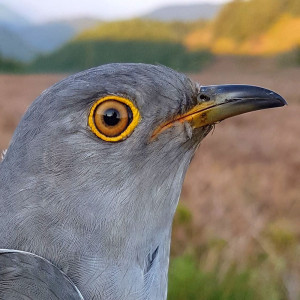
My Tagged Cuckoo, JAC.


My Cuckoo JAC.


The cuckoo's journeys back to the UK can start anytime from early January to early March and the first leg typically takes them up to a few hundred km north from their wintering grounds in the Congo Basin. They then move west through west Africa with some moving as far west as Liberia and Guinea. This stop off in west Africa during the spring migration is a very important time for our Cuckoos, a time when they must find good feeding opportunities which will allow them to lay down fat deposits which will fuel the next leg of their journeys across the Sahara Desert. Five Cuckoos remain from the 12 tagged birds that set off from the UK this summer. My Llangollen Cuckoo JAC is 430km west of Joe and Ellis and just over the border in the Republic of Congo. JAC is currently at the edge of a forested area close to the town of Gamboma in the Plateaux region of central Republic of Congo.

Thursday, 1 December 2022

Village Pond resurrected


   Old Village PondPhoto. John Elliott.  Click to enlarge

After drying up completely during the late summer, the South Winterborne lived up to its name and started to flow again overnight on 21st October/22nd October.  This ' Wherry breaking ' as it was known by old villagers,is due to the rapidly rising ground water level. which for a while was increasing at 40cms/day. It is now slightly over the normal maximum level but has levelled off to 1cm/day or less so the risk of flooding has eased. One of the former village ponds  in the old cricket field (did you know that if you hit one of the sychamore trees it counted as a six?) now has water in it, presumably spring fed. This pond and the one on the corner opposite East Lodge (now filled in) are shown as permanent features in the maps of 1896 and had a direct connection to the South Winterborne.


Magnificent Mushrooms.


                              Shaggy Inkcap.   Photo. John Elliott. Click to enlarge.


A fine clump of Shaggy Inkcap, Coprinus comatus, which has appeared for a second year by Fouracres gate at the eastern end of the village. Sometimes known as the Lawyer's Wig from the shaggy, woolly scales that form on the surface. this fungus is regarded as one of the best edible species while the fruitbodies are still young and the gills white. The gills finally liquify and turn black releasing the spores.

If drinking alcohol while eating this mushroom, make sure you are not confusing it with the Common Inkcap (C. atramentarius). Alcohol and Common Inkcap consumed together lead to vomitting and palpitations.

Monday, 7 November 2022

My Cuckoo JAC

JAC the Cuckoo
    JAC.

Just over the border in the Republic of Congo is Llangollen Cuckoo JAC. JAC is currently at the edge of a forested area close to the town of Gamboma in the Plateaux region of central Republic of Congo. He is still south and west of his 2021 wintering grounds over the border in the Democratic Republic of Congo, maybe he will join Joe and Ellis in DRC soon?

Saturday, 5 November 2022

Late Butterfly.

 The very mild autumn has led to a much longer butterfly season, with Clouded Yellows persisting in the valley, as they have elsewhere in the county. In fact a weekoago they were the  butterfly most often reported to Butterfly Conservation, (www.dorsetbutterflies.com) The top spot has now been taken by the Red Admiral which has appeared in my garden for two days running.

   Red Admiral.  Photo. John Elliott.  cte.