Tuesday, 28 September 2021

Autumn Flowering.

 As the evenings draw in and the days grow colder one of our most important plants for insect life, the Ivy Hedera helix,  will increasingly burst into flower. The summer flowers which provided nectar for numerous butterflies, flies, hoverflies, and bees of all sorts, are now over, and it is left to the Ivy to provide a feed of nectar before many of these valuable insects enter their over-winter stage. Prominent among the Honey Bees Apis melifera, which were feeding in large numbers on my garden Ivy today was a Red Admiral Vanessa atalanta.

Red Admiral on Ivy.   Photo. John Elliott.

 Red Admirals may over-winter in this country if we get a very mild winter, and perhaps will do so increasingly as we fail to deal with climate change, but most of them are now migrating south to Central or Southern Europe where they will mate to produce the first generation of next year's migration northwards and a welcome return to our shores.

Ivy makes a nice hedge and does not damage trees so if you are lucky enough to have it on your land do preserve it.


Friday, 17 September 2021

New Fungus.

 The permissive path to Ashton has provide several species new to the valley this year. The Pyramidal Orchid which appeared just past the Clandon track perhaps the most exciting, though someone appears to have pulled it up and taken it to die in their garden. Also new were the six or so Common Broomrape plants. These lack chlorophyll, which is what gives plants their green colour, and so are mainly brown with hints of red and other colours, and are often mistaken for dead orchids. There was one single plant of Hop, beer making anyone? 

The most recent arrival, and a first appearance for the valley, was a handful of Shaggy Inkcaps Coprinus comatus   by Four Acres gate.

   Shaggy Inkcaps.   Photo. John Elliott


Sometimes known as the Lawyer's Wig from the tiers of shaggy, woolen scales on the cap, this is considered to be one of the best edible species when the gills are still white, but it soon deliquesces into drops of black liquid, a source once of black ink. If you plan to drink alcohol while eating this mushroom make sure not to confuse it with Common Inkcap. Alcohol and Common Inkcaps together cause vomiting and palpitations.


Thursday, 9 September 2021

Dragonfly.

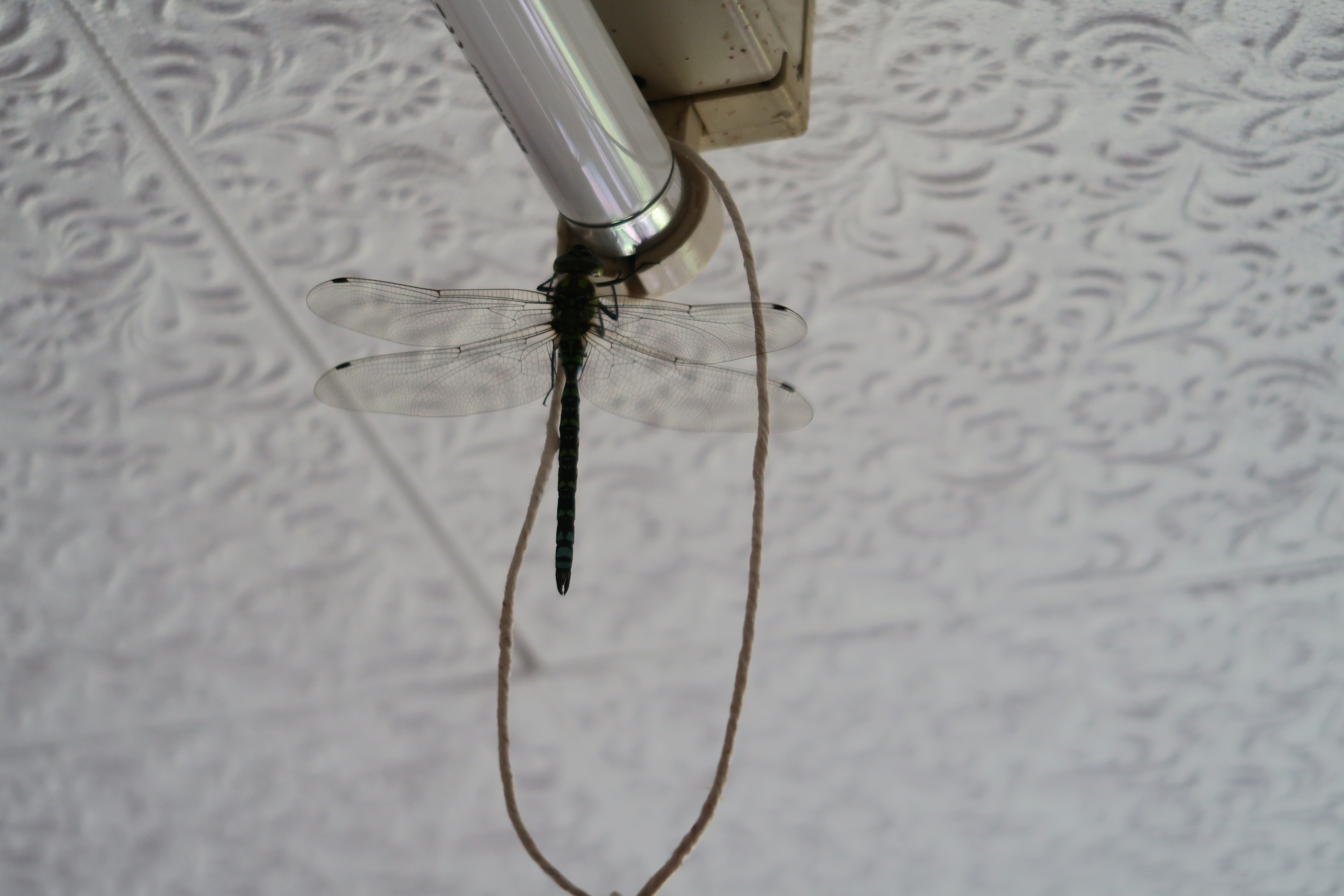
The untidy wilderness that is my wildlife garden is beginning to show dividends in  the insect life it supports, none more welcome than the dragonflies and damselflies that are now becoming frequent. However I was not prepared, when testing a new kitchen fluorescent tube, for  the large fluttering insect that attacked it.

Hawker Dragonfly.  Photo. John Elliott

A Hawker of some species, it finally settled and I was able to get a photo, though in silhouette it didn't reveal much. On switching the light off it went to the next best thing, the window and I was able to get a better shot, it was a Southern Hawker.

Southern Hawker. Photo. John Elliott


Let out it flew happily round the garden for a while before disappearing over the hedge.


Sunday, 8 August 2021

My Cuckoo on the move.


The latest BTO bulletin on my Cuckoo - Jac.

03 Aug 2021 - JAC moves to Nigeria via Niger and Benin
Since leaving Burkina Faso, it looks as if JAC has been on a mission to tick off as many countries as possible over the last few days. In the space of 187 Km, he has visited Benin, Niger, and Nigeria. He is now in north west Nigeria

Wednesday, 4 August 2021

Great Green Bush Cricket.

 The permissive path to Ashton is still covered in flowers, with the delicate blue of Devil's Bit Scabious  being a recent addition. This is the food plant of the Marsh Fritillary caterpillar which unfortunately was nowhere to be seen, but the flowers were providing nectar to dozens of Common Blue butterflies as well as Meadow Brown and Gatekeepers. Also nectaring were two Clouded Yellows, the first I have seen this year.

 A first ever, for me at least, was a Great Green Bush Cricket walking along the top  rail of the the small gate just north of the cricket field. It is a common enough species but normally it lives in trees, bushes and rough vegetation, not on steel gates, so not easily seen.

 Great Green Bush CricketPhoto. John Elliott.  

I was hoping along the walk to check on the Pyramidal Orchid which was growing at the path edge (see below), but sadly there was no sign of it. It might have gone over by now but the dried up remains should have been there if it had. No sign of digging which often happens, so I can only assume it was pulled up, roots and all, by persons unknown.  Great pity.


Wednesday, 28 July 2021

My Cuckoo.

 The latest BTO bulletin indicates that my tagged Cuckoo, Jac, has now not only crossed the Mediterranean but also the Sahara.


When we last updated you, Llangollen Cuckoo JAC was nearing Barcelona. He has made very good progress since! By 18:45 on Friday night he was in or around the Hoggar mountains in the central Sahara, southern Algeria. The highest peak in this mountain range, Mount Tahat, is 2,908 m (9,541 ft) high. Isn't it extraordinary to think of the sorts of landscapes our Cuckoos pass through on their incredible journeys? By 09:23 Saturday morning, he had made it as far as eastern Mali. By 7pm on Monday evening, he had covered the remaining 560Km over the Sahara in southern Mali and had arrived in Burkina Faso.

Over the last 24 hours he has flown 98km (60 miles) south east, and is close to Arli National Park in eastern Burkina Faso. He'll have elephants, hippos and lions for company as he stocks up on hairy caterpillars! The temperature there today is 24° with a high probability of thundery heavy showers.

Friday, 23 July 2021

Cuckoo Jac moving south.


Jac.
 

The BTO have just issued a bulletin on the movements of this year's tagged cuckoos, including mine.

A series of updates from JAC's tag on Wednesday showed that he had flown 672Km (418 miles) south from his last location near Maintenon, France, over the border into Spain. He was on the slopes of the Sierra de Manga mountain range, close to the village of Ainet de Besan. He was approximately 8Km north east of the town of Llavorsi. Subsequent, low quality signals showed him pressing on further and by late Wednesday night he was 25Km north west of Barcelona. Will he carry on to Africa from here, or stop for a rest?


Jac's track from Wales to spain