Tuesday, 28 March 2023

My garden Hedgehog.

.

 Over the last fifty or so years night-time visitors to my garden have included Badgers, Foxes and Hedgehogs, with the latter the most easily seen, as they seem not terribly worried by either light or sound from me. I even managed to tread on one on one occasion, and once rescued a rolled up, squealing hedgehog which a badger was trying to unroll. 

 Kind neighbours gave me a Hedgehog Feeding Kit for my .recent 93rd birthday. I started this off at the far end of the garden and gradually moved it nearer the house until it became illuminated by the house lights and I could see what was happening. Here is last night’s picture -  now for some video.

   Hedgehog in Tregerrick garden.   Photo: John Elliott.


Friday, 24 March 2023

My Cuckoo on the move.


 Yesterday's BTO bulletin on my tagged Cuckoo, JAC

 Since arriving in Guinea on 28 Feb JAC has flown a short distance north and is now halfway between Diassadougou and Guieredougou in eastern Guinea. He has spent approximately 20 days in this area preparing for the next leg of his northward migration. Last year he began crossing the Sahara on 7th April, so be prepared for JAC to migrate within the next 3 weeks. 

Saturday, 18 March 2023

Snake Violets.


 Dog Violets.  Photo: John Elliott

Species come and species go. During nearly fifty years in the village there have been quite a few changes, birds in particular have suffered losses, Greater Spotted and Green Woodpeckers, Nuthatches and Tree creepers being notable examples. These are typically woodland birds likely to fall prey to Grey Squirrels. Among plants Brooklime with its attractive blue flowers, seems to have gone from the stream, but Hemlock Water Dropwort, Britain’s most poisonous plant, is flourishing, largely due to the riparian owners ‘gardening’ in the name of flood prevention.

It was a pleasure therefor to see a patch of about 35 Dog Violets (Snake Violets in Dorset dialect) beside the footpath behind the Manor House this morning. I don’t recall seeing these in the village before. Violets are the food plant for all the Fritillary species, the most likely of which is the Silver Washed Fritillary, since there is a sizable colony of these up on Black Down and they might well spread from there into the village.

A further delight today, the sulfurous yellow of a Brimstone butterfly in my front garden, with one reported further down the village


Tuesday, 7 March 2023

Local nature artist.


Jindra Jehu is a visual artist and educator living in Martinstown. Her work is concerned with nature and science and is influenced by her local environment, including the Winterborne Valley.

 It was short listed in the Woman Science Photographer of the Year competition.

  Photo. Jindra Jehu

A paper and engine oil structure transformed by the growth of pink oyster mushrooms


Jindra Jehu

A paper and engine oil structure transformed by the growth of pink oyster mushrooms, by Jindra Jehu (above);

Friday, 3 March 2023

My Cuckoo is on the move back to Wales.

 An update on my sposore Cuckoo JAC, received today from the BTO.


JAC reaches Guinea

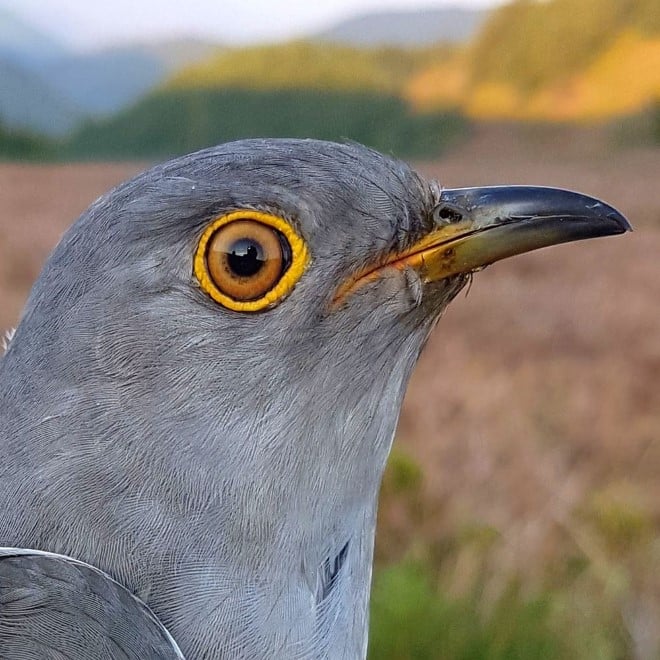
Photo shows the head and upper body of handsome male Cuckoo, JAC. He is a silver/grey bird with an arresting yellow eye ring and orange iris around a black retina.

Llangollen Cuckoo JAC

Dear John,


Since our last update both JAC and Joe have made the first big moves of their spring migrations. Having spent the last few weeks in the rainforests of the Democratic Republic of the Congo, a new update received on 22 February showed that JAC had flown 1,915km (1,190 miles) west to Nigeria. A few days later he flew a further 1,390km (864 miles) west to his current location in south eastern Guinea. He is now approximately 200km south east of Cuckoo Ellis. In 2022 JAC stopped off in Ivory Coast from 27 Feb to 7 April when he embarked on his desert crossing, arriving back in the UK on 29 April.

Tuesday, 28 February 2023

Rooks starting their year.


                                                           Nesting Rooks.      Photo. John Elliott

 The Horse Chestnut tree outside my bedroom window is becoming a hive of activity as the seven pairs of Rooks make a start on the new nests for this year. Last year's nests, all except one, have been torn down and twigs from the Horse Chestnut, or from further afield, are carefully placed in position. Getting the first stick to stay in the crook of the branch can often take several days, with any dropped sticks not being recovered but left littering my drive or the pavement. 

Half a Wood Pigeon's egg shell on the drive among the sticks indicates an early hatching somewhere close, perhaps in the Pittosporum at the other side of the gate. I hope the chicks are surviving the recent frosty nights. 


T

Saturday, 21 January 2023

First sign of Spring.

              Butterbur              Photo John Elliott

The first of our early spring flowers, Butterbur, is now showing a few blooms  on the bank of the Winterborne at the eastern end of the village. So called from the large leaves which follow the flowers and were used to wrap butter.  It has two Dorset dialect names, 'Early Mushroom' arising from the  flowering stems as they push through the soil in early spring looking like small button mushrooms, and also 'Snake's Rhubarb'.

It shares medicinal properties with the related Coltsfoot which also blooms before the leaves show, and which used to grow abundantly on the village verges (until the Council  adopted its present policy of twice yearly cuts and removal of the grass to encourage the growth of wild flowers!) The dried roots, "powdered and mixed into wine, were taken against fevers, especially the plague." I wouldn't try it for Covid though as the roots may be confused with those of the much commoner Hemlock Water Dropwort, our most poisonous plant.

Butterbur also occurs at the western end of the village, both sites being possible locations for mediaeval water mills. Could there be a connection?


                                                         Butterbur              Photo John Elliott