Tuesday, 25 October 2022

The Wherry Breaks.


Older residents in the village will remember the excitements of ‘the Wherry breaking’ each Autumn as the South Winterborne suddenly resumed its flow after weeks of being perfectly dry. In recent years this pattern of behavior has been interrupted by the activities of Wessex Water, but this year the classic flow pattern has been evident. It is well known that the flow in the stream is controlled by the annual rise and fall of the aquifer, the ground water level being easily available online for the borehole at Ashton. After falling at around 5cm per day throughout the summer months the rate dropped in August to 2cm per day and the stream dried up at Ashton, though there was still a small flow through the main channel in Martinstown. The ground water fall of 1cmpd then continued until the 21st October, with the stream bed being dry. On the 22nd of October the ground water movement reversed direction suddenly with a rise of 5cm. And low and behold, there was again a small but steady flow through the village, The Wherry had broken.


                                                                                                     video.  John M Elliott

Thursday, 29 September 2022

Conkers Gallor

Horse Chestnut.  Photo. John Elliott Click to enlarge.

 The unusually hot summer we have had has led to abundant crops of fruit, berries, nuts, - and conkers.

The Horse Chestnut outside my bedroom window has the heaviest crop of conkers that I can remember in the nearly fifty years I have lived here. A few have already fallen or, in the case of the low hanging ones, been picked by passers by. These however, once opened, reveal rather small conkers which won't be much use for playing 'conkers' (are children allowed top lay such 'dangerous' games these days?)  Elderly ladies also gather them as they are believed to scare spiders, though I must say they don't seem to make much difference in my summer house. Most of the brown colouration of the leaves is not the normal autumn change but due to the action of the larvae of the Horse Chestnut Leaf Miner moth This is a fairly recent arrival in this country which at first was not thought to do much damage to the tree, but it does seem to get worse with the passage of time, and is now covering a large percentage of the leaf area and restricting the area of the vital green chlorophyll. Smaller patches of brown are due to a fungus, Chestnut Blight, another recent arrival,which has caused large losses of Chestnut trees in America.

The Hazel bush next to the Horse Chestnut has also yielded many nuts, but the Squirrel from across the road is beating me to it.

Tuesday, 30 August 2022

South Winterborne Flowers.

The busy Weymouth Road is not the best of places for an afternoon walk, even on a Sunday when there is little commercial traffic It is however highly rewarding from the botanical point of view, providing an agreeable contrast to the South Winterborne as it passes through the village and has been dredged to a mono-culture of Hemlock Water Dropwort, the most poisonous plant in the country. Going downstream from the pumping station the enormous leaves of Butterbur dominate the bank for some metres, their pink flowers, which are the first wild flowers to appear in the Spring, are long since over and gone. Burdock has now developed the hooked seed-heads which children used to delight in throwing at each other to stick on their clothing.

All along the stream banks the long tendrils of Large Bindweed support the large white trumpets of its flowers, but dominant at the moment along the length of the stream are the metre high pink flowers of the Great Hairy Willowherb, rapidly turning into little white parachutes waiting for a bit of breeze to disperse them. Here and there the purple flowers and bright red berries of Woody Nightshade, another poisonous plant, appear. The nearby Elder is now bearing its dark red fruits which make it one of our most useful hedgerow plants, The fruits make excellent wine or jam, while earlier in the year a couple of flower heads can be turned into Elderflower champagne. A few plants of Comfrey and Lords and Ladies appear, the latter now spikes of brilliant red, and poisonous, berries. A single dried up stem of Hemlock is still standing, The purple blotches on the stem which identify this very poisonous plant still show. Definitely not for peashooters.

Ribwort Plantain is common all along the stream. This is another plant which children used to play with as the seed heads can be fired a considerable distance at ones enemies. The few Yarrow plants are rather small. Regarded as a powerful herb since Anglo-Saxon times, it was used in divination rituals and as a charm against bad luck, as well as staunching wounds. Water Mint is a frequent occurrence all along the valley. A single plant of the very attractive, but unwanted, Himalayan Balsam is all that remains of a once frequent occurrence. The efforts of the Dorset Wildlife Trust to eradicate it seem to be succeeding. Hedge Woundwort and Purple Loosestrife and a single Oxeye Daisy complete the list.

Away from the stream a single Pyramidal Orchid has now flowered and gone over. This was not in the same place as last year’s specimen which was unfortunately dug up and taken. Now that that danger has gone perhaps I can show a picture of this year’s rather small specimen.Perhaps it didn't like the heat.

  Pyramidal Orchid.  Photo. John Elliott


Sunday, 21 August 2022

Cuckoo JAC.

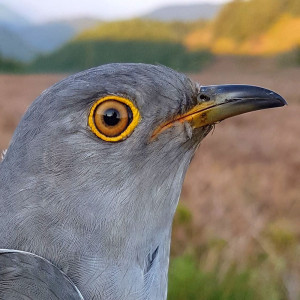
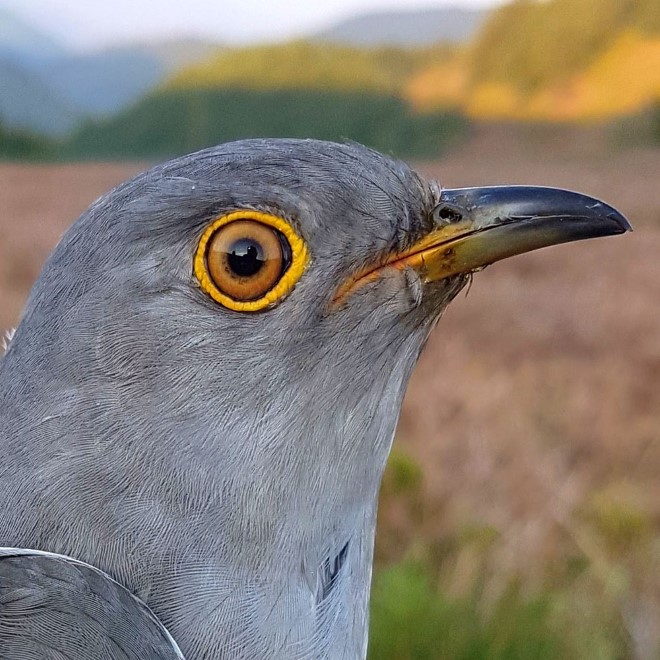
 The latest bulletin from the BTO on my Cuckoo, JAC.

Llangollen Cuckoo JAC has flown approximately 300km (186 miles) east within Nigeria towards north central Nigeria. His route took him to Kamuku National Park and he has since flown a further 30km east. He is now in north west Kaduna state, approximately 90km north west of the city of Kaduna. Last year JAC stayed in Nigeria until mid October when he moved directly to the Congo Basin where he spent the winter. AC.


Saturday, 23 July 2022

South Winterborne flood prevention.

 There stilll seems to be uncertainty in the valley as to what should be done about flood prevention. Perhaps we should note what Dorset Wildlife Trust are doing, namely --  Slowing the Flow.


My Cuckoo makes it across the Sahara desert.

JAC the Cuckoo
     JAC.

  The latest bulletin from BTO brings good news of my tagged Cuckoo, JAC, now some 7,000 miles from home.

Llangollen Cuckoo JAC has successfully completed his desert crossing. He is now in the rainy Sahel of eastern Mali, 24km (14 miles) north east of the city of Goa.

Friday, 15 July 2022

My Cuckoo.

 An exiting bulletin from the BTO .

Llangollen Cuckoo JAC


The big mover over the last few days has been Llangollen Cuckoo JAC. Having spent two weeks in northern France, by Tuesday evening he was close to L'escala on Spain's Costa Brava. But he didn't hang around for long as further updates received that evening showed him crossing the Mediterranean on a bearing for Mallorca. The next updates arrived between 04:55 and 08:35 this morning by which time he had reached northern Algeria. His most recent location showed him approximately 200km south of Algiers, and just south of the vast Zehrez Chergui salt lake in the high steppes between the Tell Atlas and Saharan Atlas mountains. Last year his desert crossing took him via Mali to Burkina Faso and then on to Nigeria.